What visual management actually is
Visual management is the practice of making the state of work visible without asking anyone. A production board shows output at a glance, a shadow board shows tooling status, a safety board shows open actions and owners. The information lives on the wall, in the format the team already uses, so status stops being something people have to extract from each other.
The types of visual boards
Daily management boards
Formatted for the shift start meeting. Sections for output versus target, quality issues, safety, attendance and open actions, each with an owner and a due date. The board keeps the meeting to five focused minutes because the facts are already visible.
KPI and trend boards
For leadership reviews, showing performance over weeks and months. Charts, trend lines and target bands make improvement or decline readable without a spreadsheet. A good KPI board answers where we are, where we are going and what is blocking us.
Shadow and tool boards
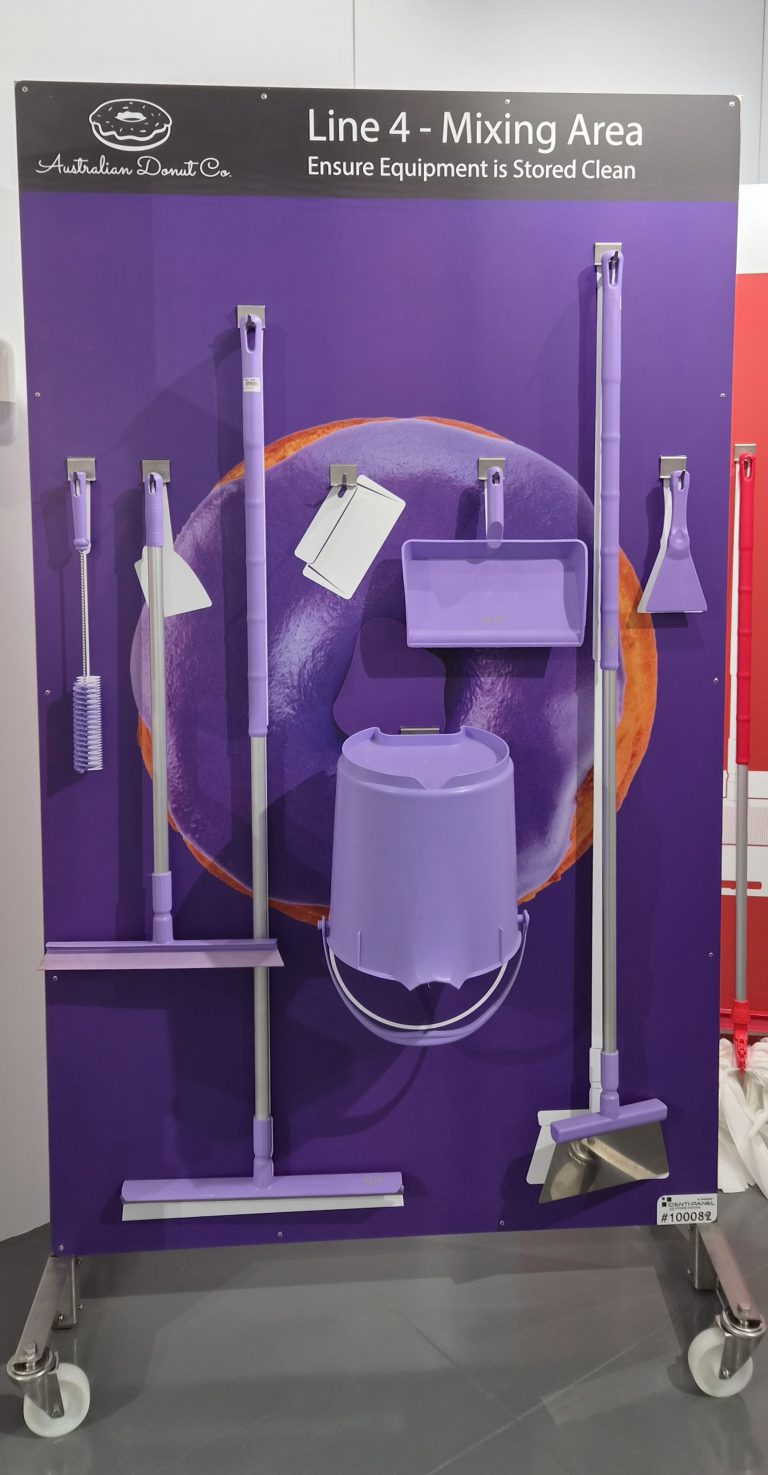
The equipment layer of visual management. Cut outs, holders and labels keep tools, cleaning gear and PPE in fixed positions where missing items are obvious. They are the visual system that works without any meeting at all.
Safety communication boards
Incident registers, near miss tracking, action follow up and emergency information. The board keeps safety conversations current and makes open actions public, which is exactly why they get closed.
Design rules that keep boards alive
- Format follows the meeting Design the board around the questions the meeting must answer, not around a template.
- Update in under a minute If updating the board takes longer than the meeting, people will quietly stop.
- Every section has an owner A section with no name attached is a section nobody owns.
- Current state dominates Yesterday’s data supports the story; today’s state leads it.
- Visible from a metre away If staff must walk up and squint, the board is failing at its core job.
The rhythm that makes visual management work
Boards do not manage anything on their own. The system works when there is a rhythm around them: a daily stand up at the area board, a weekly review at the KPI wall, a monthly leadership session that follows the same structure. The boards carry the facts, and the rhythm decides what happens with them. When the rhythm is consistent, the boards stay honest; when meetings drift, the boards go quiet first.
Starting small and scaling
Begin with one area and one board that supports its existing meeting. Get the format right there, prove the value, then roll the same structure to other areas and eventually to other sites. Multi site operators benefit most from standardisation: the same board layout in every plant means leaders read one visual language everywhere, and audits compare like with like.
We build KPI boards, daily management systems and shadow boards to your format. Tell us about your meetings and we will discuss a layout for your requirement.