
5S in one sentence
5S is a five step method for organising a workplace so that everything has a place, problems become visible and the arrangement stays that way through daily habit. The five S words are sort, set in order, shine, standardise and sustain. Originating in Japanese manufacturing, the system has become the foundation of lean programs around the world, including thousands of Australian plants and workshops.
1
Sort
Separate what is needed from what is not. Tools that no longer belong, broken equipment, redundant spares and personal clutter all leave the workspace. The goal is a work area that contains only what the job actually uses. Teams often find this step the most powerful because it reduces the volume of everything that follows.
2
Set in Order
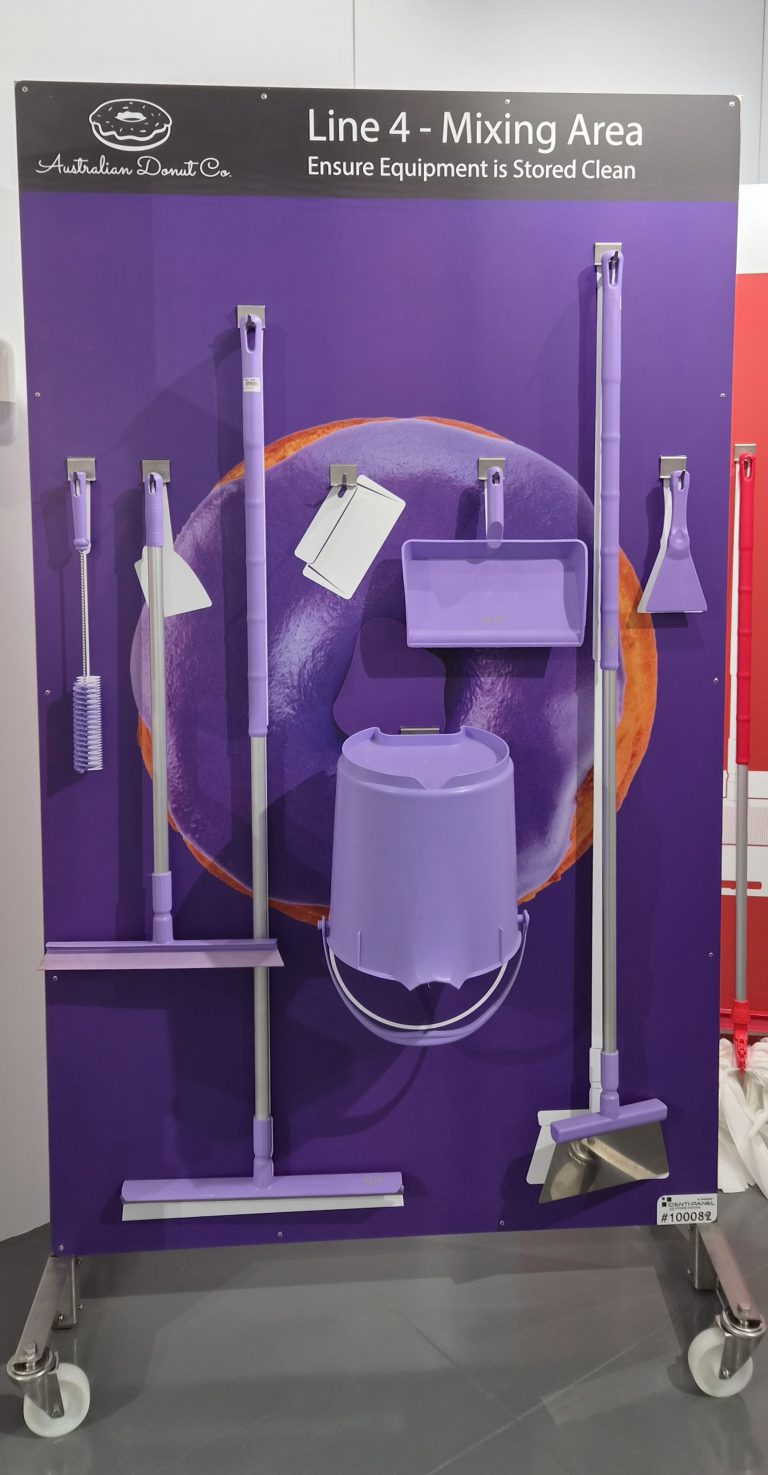
Give every remaining item a fixed home, chosen for how often it is used. Frequently used tools sit closest to the work. This is the step where shadow boards, labelled drawers and shadowed storage earn their keep. A painted outline or a cut out says where an item lives and where it returns, without a single word of instruction.
3
Shine
Clean the area and inspect it while cleaning. Shine is not just tidiness. It is the moment problems become visible: a leaking hose, a cracked guard, a tool that is wearing badly. Cleaning with the intent to inspect turns routine wiping into a daily health check.
4
Standardise
Make the organised arrangement the standard way of working. Standardise means the same layout, the same labels, the same colours appear in every shift and every area. When the standard is visual, as it is with a shadow board, new people absorb it without training. Auditors can verify it without asking.
5
Sustain
Hold the gains. Sustain works through checks, ownership and habit: a daily scan of the boards, a weekly audit, a named owner for each area. The boards make sustaining honest, because backsliding shows up as empty shadows and misplaced tools. You cannot quietly stop doing 5S when the walls display the standard.
Why 5S fails, and how to stop it
The classic failure is not the first three steps, it is the last two. Areas get sorted and labelled in a launch week, then drift back to chaos because the standard was never made visual or nobody was made accountable. Shadow boards and visual boards are the antidote because they externalise the standard. The wall checks the team as much as the team checks the wall.
Where to start
Pick one area, usually the one that hurts most, and run all five steps properly. Measure the before state, even roughly: minutes spent searching per shift, audit findings, handover issues. After the board system is in, measure again. The numbers make the case for the next area better than any presentation. For most sites, a workshop or a single production line is the right pilot zone.
We design shadow boards, tool boards and visual management systems that carry the 5S standard for you. Send your tool list and we will discuss a concept for your workplace.