Freestanding & Mobile Shadow Boards
Work areas where wall mounting is unsuitable, or tools that need to move between areas, call for a different format. 5trak designs freestanding and mobile systems around the same principle: tools and equipment with clear, defined locations.
Overview
Freestanding & Mobile Shadow Boards for the way your team works
Not every work area has suitable wall space, and not every tool stays in one place. A freestanding or mobile shadow board keeps the visual system close to the work, whether the position is fixed on the floor or moving between areas with the equipment it organises.
The layout is still designed around the actual tools, available space and how the work flows. What changes is the format: a freestanding frame where wall mounting is not practical, or a mobile board where the tools need to travel.
Design details
Built around the small things that save real time
Freestanding frames
A fixed position on the floor where wall mounting is not practical, suitable for open or temporary work areas.
Mobile on castors
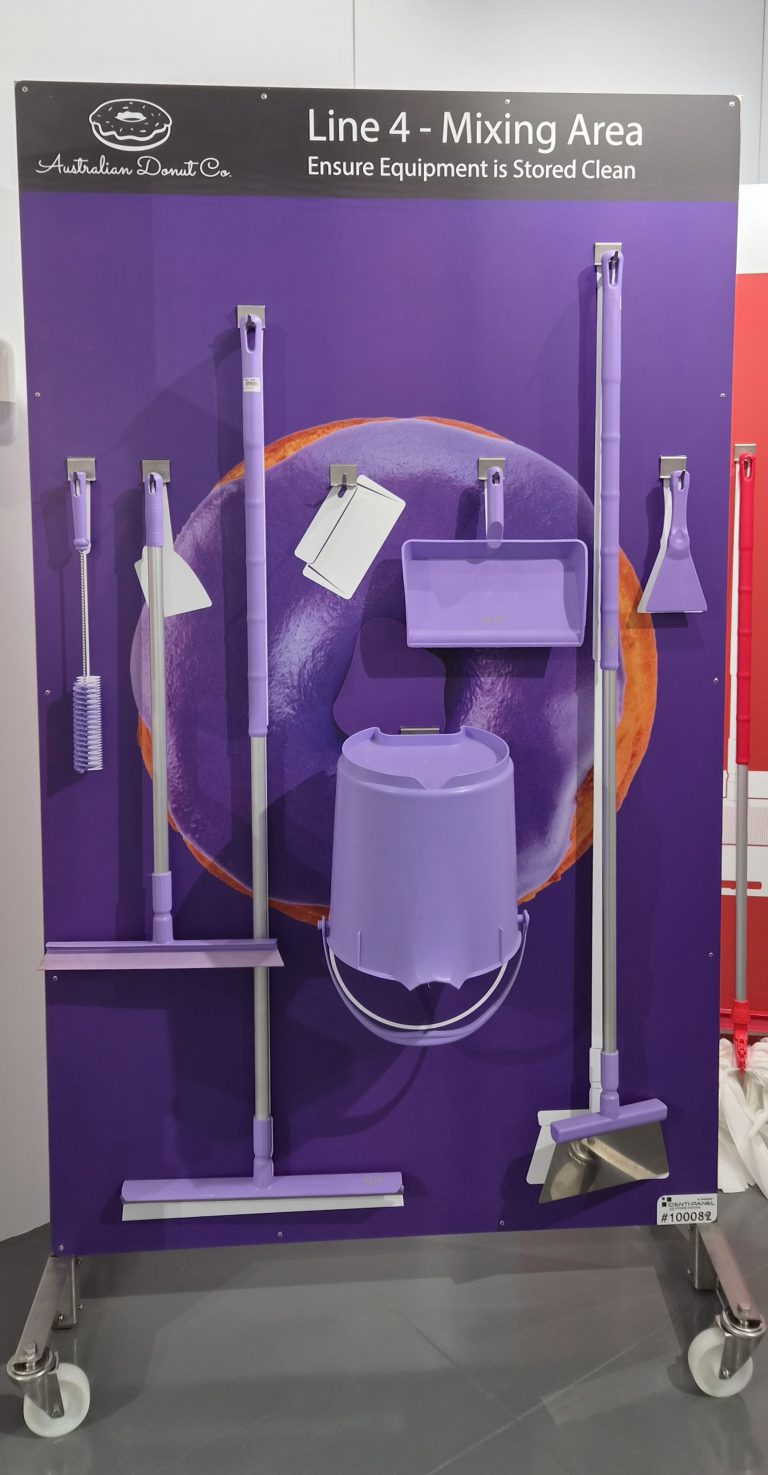
Locking castors let the board move between work areas with shared tooling or changing tasks.
Designed around the tools
Holders, labels and silhouettes are configured for the specific tools and equipment being organised.
Consistent visual standard
Layouts can match your existing wall-mounted boards so the workplace reads as one system.
Materials and options
Specified for your environment, not off the shelf
Every option below is a decision we walk you through at quoting stage. You choose what matters for your audit, your washdown routine and your budget, and we do the rest.
| Formats | Freestanding frames and mobile trolley configurations, single or double sided |
| Mobility | Locking castors where the board needs to move; fixed floor position where it does not |
| Board layout | Custom positions, holders, labels and visual cues mapped to the actual tools |
| Applications | Shared tooling, maintenance bays, field kits, temporary cells and multi-area work |
Where it performs best
Common applications across Australian sites
Shared tooling
Mobile boards keep shared tools visible and accounted for as they move between cells or crews.
Maintenance bays
Freestanding positions suit bays where wall access is limited or the layout changes.
Field and site crews
Mobile systems travel with the work so the same standard applies across locations.
Temporary work areas
A freestanding board establishes clear organisation without permanent wall mounting.
Common questions
Frequently Asked Questions
Straight answers to the questions we hear most from Australian maintenance, quality and operations teams.
Have a different question? Call 1300 089 353 or send it through the contact form. Every enquiry is answered directly.
When should we choose a freestanding shadow board?
Freestanding systems suit fixed positions where wall mounting is not practical, such as open work floors, temporary cells or areas where the layout changes regularly.
When does a mobile shadow board make sense?
Mobile boards suit tools or equipment that need to move between work areas, shared tooling used by different crews, or sites where the work itself moves.
Can mobile boards be locked in position?
Yes. Mobile boards are fitted with locking castors so they stay stable while in use and can be secured when the area is not in operation.
Can mobile boards match our existing wall-mounted system?
Layouts, labels and visual conventions can be replicated across formats so the workplace reads as one consistent system.
Choosing a format
Wall-mounted, freestanding or mobile?
The right format depends on the work area, available space and whether the system needs to move. Compare the options and discuss what fits your site.
1
Wall-mounted
A permanent location with suitable wall space and tools that stay in one area.
2
Freestanding
A fixed position where wall mounting is not practical, such as open floors or temporary cells.
3
Mobile
Tools or equipment that need to move between work areas, with locking castors for stability in use.